Introduction
If you want to see wildlife, nature, and culture all in one place in Nepal, Chitwan National Park is one of the best places to go. This UNESCO World Heritage Site is in the subtropical lowlands of southern Nepal and offers an amazing jungle safari.
Chitwan National Park is the best place to go if you want to see more of Nepal than just the mountains. Families, couples, and solo travelers can all have a full wildlife experience in Chitwan, from thrilling vehicle safaris to peaceful river cruises.
Why You Shouldn’t Skip Chitwan National Park ?
If you’re planning a trip to Nepal, everyone talks about the mountains. But honestly? You’re missing out if you don’t head south to the Terai plains. Chitwan National Park is usually the go-to for anyone wanting a real jungle safari in Asia, and for good reason it’s one of the few places where the wildlife actually lives up to the hype.
Beyond the Tigers
Yeah, everyone wants to see the ‘Royal Bengal Tiger’, and if you’re lucky, you might just catch a flash of orange through the trees. But the real stars here are the ‘One-Horned Rhinos’. Seeing a literal armor-plated giant casually crossing the path in front of your jeep is something you don’t forget. Then you’ve got the sloth bears, wild elephants, and those weirdly cool Gharial crocodiles hanging out by the riverbanks. It feels raw, not like a staged zoo.
No Trekking Boots Required
The best part about Chitwan is that it’s actually easy to get to. Most of the “epic” stuff in Nepal involves 10 days of walking or a sketchy mountain flight. Chitwan is just a straightforward drive or a tiny 20-minute flight from **Kathmandu or Pokhara**. It’s the perfect spot to just chill and soak in some humidity after you’ve spent a week freezing in the Himalayas.
A Paradise for Bird Lovers
If you think birds are boring, Chitwan will change your mind. With over 500 species recorded in the park, it’s basically a giant, open-air aviary. We highly recommend hitting the trails for an early morning tour. Whether it’s the giant Hornbill or the bright flash of a Kingfisher, the colors and sounds at dawn are incredible even if you aren’t a “bird person” yet.
The Tharu Vibe
Beyond the animals, there’s the ‘Tharu community’. They’ve been living in these jungles forever, and their culture is deeply tied to the land. Catching a traditional stick dance or just walking through a local village at sunset gives the trip a much deeper meaning. Their houses are built with mud and rice husks, and the hospitality is just on another level.
Conservation Success Story
It’s worth noting that your visit actually helps. Chitwan is a global example of how to bring species back from the brink. Decades ago, rhinos were nearly gone; now, thanks to strict protection and the help of local communities, the population is booming. When you pay for a park permit, you’re directly funding the rangers who keep these animals safe from poachers.
The Bottom Line
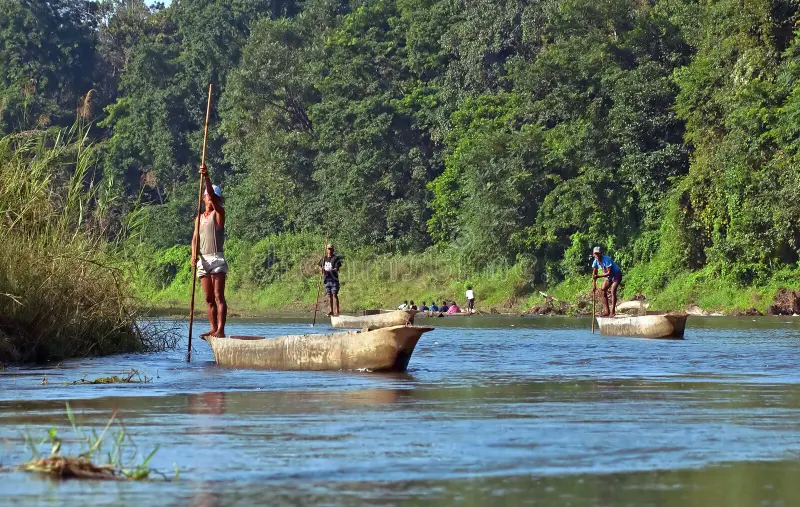
Whether you’re quietly drifting down the Rapti River in a wooden canoe or bumping around in the back of a 4×4, Chitwan hits different. It’s loud, it’s green, and it’s arguably the best way to see the “wild” side of Nepal without having to climb a 6,000-meter peak.
How much does a Chitwan National Park Tour cost?
The truth is, the price of your trip depends mostly on where you sleep and how much “pampering” you want. Most people go for a 2-night/3-day package because it’s the perfect amount of time to see the main sights.
Here is a quick breakdown of what you can expect to pay in 2026:
Average Price Range:
- Budget package: $100 – $150 (2N/3D)
- Standard package: $150 – $250
- Luxury package: $300+
Additional Costs:
- Park entry fee
- Jeep safari charges
- Guide services
Best Time to Visit Chitwan National Park
October to March (The Best Overall Season)
This is the most popular time for a reason. The weather is cool and pleasant, so you won’t be sweating all day.
Why it’s great: The skies are blue and clear. In January and February, the tall grass is cut down by locals. This makes it much easier to see rhinos and tigers because they have nowhere to hide!
Best for: Everyone families, solo travelers, and first-timers.
April to June (The Best for Wildlife Photos)
It gets very hot during these months (sometimes over 40°C), but if you can handle the heat, the wildlife sightings are incredible.
Why it’s great: Because it’s so dry, animals like tigers and leopards have to come out to the riverbanks to drink water. If you want that perfect tiger photo, this is your best chance.
Best for: Serious photographers and wildlife enthusiasts.
July to September (The Green Monsoon)
This is the rainy season. While it’s not the “standard” time to go, it has a very different vibe.
Why it’s great: The jungle is incredibly green, lush, and quiet. There are almost no other tourists, so you’ll have the place to yourself. Plus, hotels are much cheaper!
The Downside: Some jeep tracks might be closed because of the mud, and you’ll need to watch out for leeches during jungle walks.
Best for: Budget travelers and people who want peace and quiet
How to Reach Chitwan National Park
By Road (The Popular Choice)
Most travelers take the tourist bus. These aren’t your typical local buses; they are comfortable coaches, usually with AC and reclining seats.
From Kathmandu: Buses leave early (around 7:00 AM) from the Sorahkhutte area (near Thamel). The ride takes about 5 to 7 hours depending on the road work.
From Pokhara: It’s a similar 5-hour journey. It’s a great way to see the Trishuli River and the changing landscape as you move from the hills to the flat plains.
By Air (The Fast Track)
For those who’d rather skip the drive and the potholes, flying is the way to go.
It is the most stress-free way to start your safari.
The Journey: Your flight will take you from Kathmandu to Bharatpur Airport.
The actual flight time is a brief 20 to 25 minutes.
The final stretch: After you touch down, it’s a swift drive of about 30 to 45 minutes to get to your hotel, either in Sauraha or near the National Park.
Private Vehicle (For Comfort & Families)
For those journeying with a group or family, the added expense of a private car or jeep rental is often justified.
Feel free to pause for snacks, snap some pictures, or take a bathroom break whenever the mood strikes.
Door-to-door service means a private car will collect you from your hotel and take you straight to your Chitwan resort. This eliminates the need to hunt for a taxi at the bus station.
Wildlife You Can See in Chitwan
One-horned rhinoceros the iconic creature is synonymous with Chitwan, frequently spotted close to rivers and in the park’s grasslands.
Bengal tigers are notoriously hard to spot, but Chitwan National Park in Nepal presents some of the most promising opportunities to see them.
Gharial crocodiles with their elongated snouts, inhabit the waters of the Rapti River.
The marsh mugger crocodile, a more sizable and frequently encountered species, is often found in proximity to water.
Spotted deer, sambar, and barking deer often make appearances during safaris.
Wild boars are frequently seen in the woods, often in groups.
Monkeys and langurs They’re often visible, swinging through the branches or ambling along jungle trails.
A Chitwan National Park safari presents a wonderful opportunity to observe Nepal’s wildlife in its natural habitat, flourishing as it was meant to. It’s an ideal experience for those who appreciate the beauty of nature.
Conclusion
Chitwan National Park is a great place to see Nepal’s amazing animals and beautiful scenery. The park has something for everyone, whether you want to go for a short trip or a longer one.
Every moment in Chitwan is special, from the excitement of a jeep safari to the peaceful beauty of a sunset river ride. This place should be at the top of your list if you want the best jungle safari in Nepal. You’ll always remember this experience.