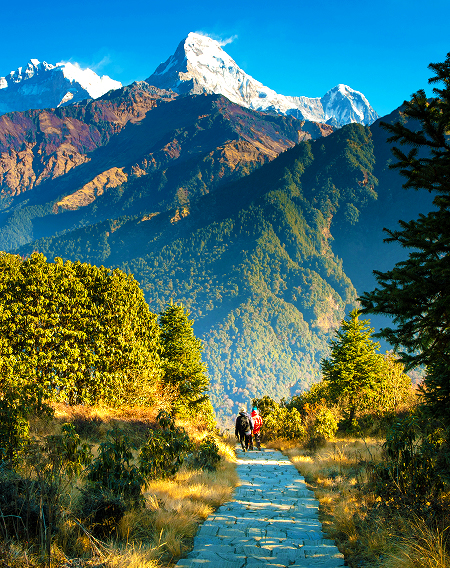
Have you ever been to a place so quiet and beautiful that you forgot everything else? That’s what Upper Dolpo feels like. It’s not like other famous trekking trails in Nepal. There are no long lines of tourists. No busy tea houses. Just mountains, silence, and one of the most stunning landscapes you’ll ever see in your life.
People who have done trekking in Dolpo find it hard to explain what it was like. They pause. They think. Then they talk about a lake, or the way sunlight hit a cliff one morning. It’s that kind of place, the kind that stays with you long after you come home.
What Is Upper Dolpo?
Upper Dolpo is a region in the far western part of Nepal. For a very long time, no outsider was allowed to go there. It only opened to tourists in 1996 which is actually not that long ago.
Even today, not many people go there. To visit, you need a special permit that costs a lot more than a regular trekking permit. You have to fly into a tiny mountain airport called Juphal, and then walk for many days through some of the highest and most remote land on Earth.
This is not a trek you stumble into by accident. You plan it. You prepare for it. And when you finally go, you understand why people say it changed their life.
Important thing to know: You cannot do this trek alone. You must go with a proper, registered trekking company. Solo trekking is not allowed here.
How Is Upper Dolpo Different From Other Treks in Nepal?
When most people think of trekking in Nepal, they think of Everest Base Camp or the Annapurna Circuit. Those are great treks but they can get very crowded. Upper Dolpo is completely different.
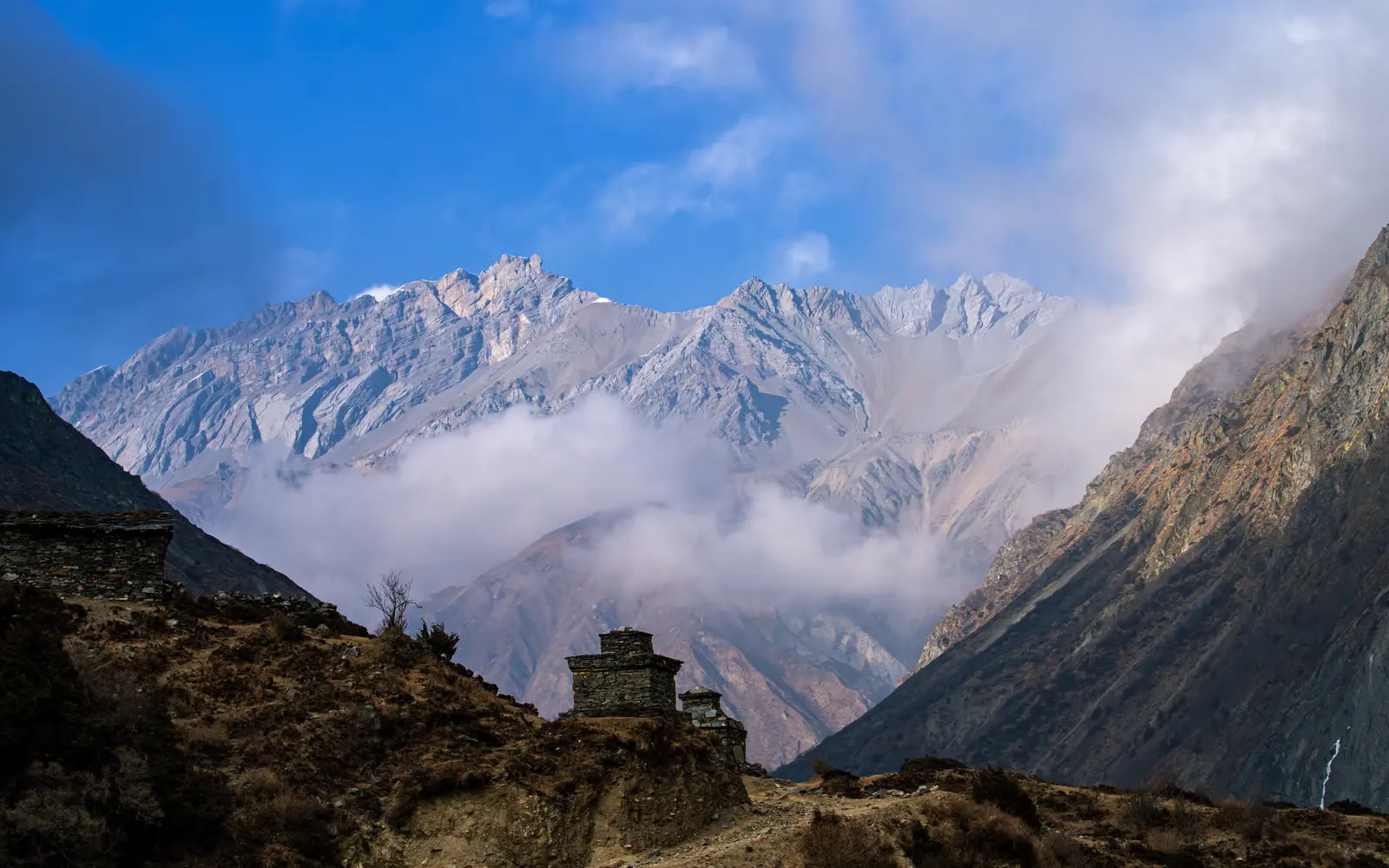
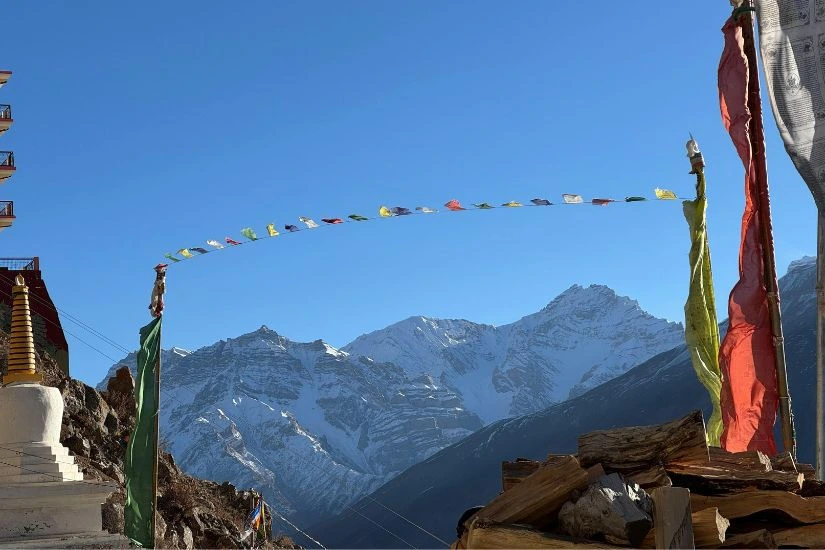
The land looks like Tibet. It’s dry, wide open, and dramatic. The cliffs are rust-red and orange. The sky is impossibly blue. It looks like a painting, but it’s real.
The people are called Dolpo-pa. They follow an ancient religion called Bon, which is even older than Tibetan Buddhism. They live in small villages high up in the mountains and have kept their way of life for hundreds of years.
The monasteries are real, working places. They are not museums for tourists. Monks actually live and pray there. When you visit, you are a guest in their world.
You might not see another foreign tourist for days. On some parts of the route, you can walk for two or three whole days without meeting another trekker from outside Nepal. That kind of peace is very rare in today’s world.
The Most Beautiful Spot: Phoksundo Lake
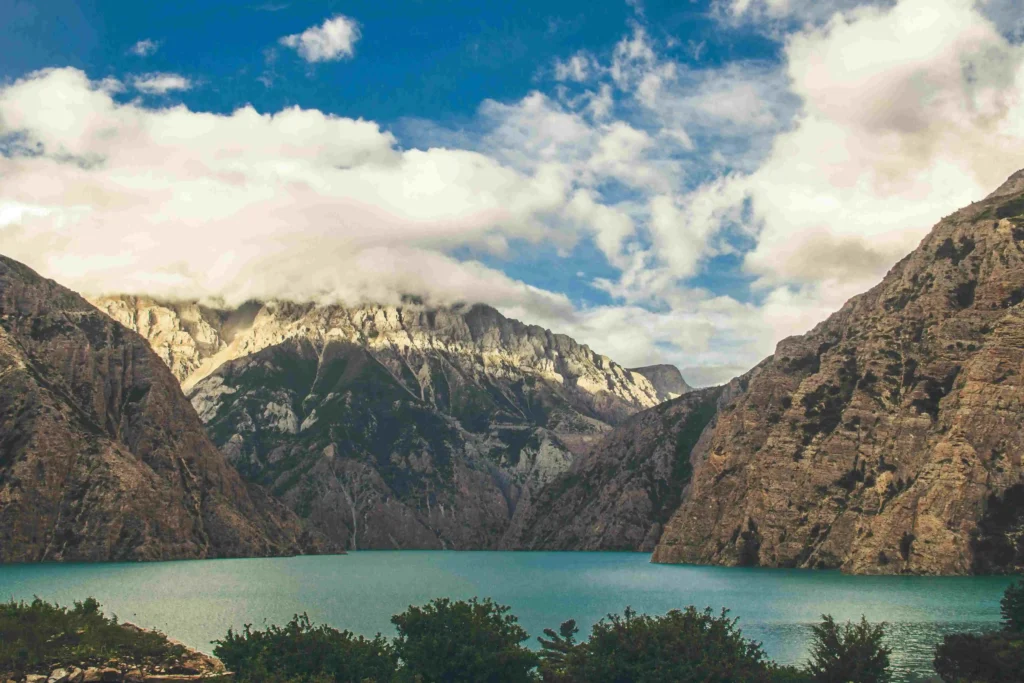
Almost every trekker remembers the moment they first saw Phoksundo Lake. It usually happens around day six or seven of the trek. You’re walking, tired and sweaty, and then suddenly, there it is.
The lake sits at 3,641 metres above sea level. The water is a bright turquoise colour like something from a screensaver, except it’s completely real. Tall grey cliffs rise up behind it. The whole thing looks like it belongs in a fantasy movie.
There’s a rest day built into the trip here so your body can get used to the altitude. But honestly, nobody minds staying an extra day. Nobody wants to leave.
The Full Trip: What Happens Each Day
| Days | Route | Altitude | Key Highlights |
|---|---|---|---|
| Day 1–2 | Kathmandu → Nepalgunj → Juphal | 2,475m | Fly to Nepalgunj, overnight stay, then small mountain plane to Juphal. Weather cancellations are common — keep an extra day free. |
| Day 3–4 | Juphal → Dunai → Chhepka | 2,140m – 2,840m | Start walking along the Suli Gad river. Pass through forests, prayer flags and small villages. Easy trail to warm up your body. |
| Day 5–6 | Chhepka → Phoksundo Lake | 3,641m | Trail climbs higher with dramatic scenery. First view of Phoksundo Lake — the moment most trekkers never forget. |
| Day 7 | Rest Day — Phoksundo Lake | 3,641m | Full rest and acclimatization day. Explore the lakeshore and nearby monastery. Nobody wants to leave. |
| Day 8–9 | Phoksundo Lake → Kang La Pass | 5,240m | First serious high pass. Steep, rocky and exposed. Air is thin — go slow. Views from the top are worth every hard step. |
| Day 10–11 | Kang La → Shey Gompa / Crystal Mountain | 4,360m | Descend into a hidden valley. Reach Shey Gompa — one of the holiest Bon religion sites in the Himalayas. |
| Day 12–16 | Namgung → Yanger Gompa → Musi Gaon → Charka | 4,000m+ | The most remote stretch of the trek. Tiny villages at extreme altitude. Almost no other tourists. Tough but unforgettable. |
| Day 17–18 | Charka La → Sangda La | 5,036m – 5,490m | Two high passes back to back. Sangda La is the highest point of the whole trek. Strong wind and cold. Views of Dhaulagiri on clear days. |
| Day 19–22 | Descent → Jomsom → Pokhara | 2,720m | The hard part is over. Walk down through the Kali Gandaki valley. Fly from Jomsom to Pokhara on Day 22. |
| Day 23–24 | Pokhara → Kathmandu → Sightseeing → Depart | 1,400m | Return to Kathmandu. Visit Pashupatinath, Boudhanath and Bhaktapur before flying home. |
The Mountain Passes: Let’s Be Honest About How Hard They Are
There are three big mountain passes on this trek. They are beautiful. They are also genuinely hard to cross. Here’s the truth about each one:
Kang La – 5,240 metres This is the first big test. The path is steep and rocky. The air has much less oxygen than what your body is used to. You will go slow. That’s completely fine slow and steady is the right approach here.
Charka La – 5,036 metres You cross this one later in the trek. By now your body is stronger and more used to the altitude. But your legs are also tired from two weeks of walking. It balances out.
Sangda La – 5,490 metres The highest point of the whole journey. The wind here is powerful and cold. Many trekkers say standing at the top exhausted, freezing, with the Dhaulagiri massif in front of them is one of the greatest moments of their life.
One important thing: if you start feeling very sick at high altitude bad headaches, confusion, or trouble breathing you must go down immediately. Don’t push through it. Your guide will help you.
How Much Does It Cost?
Permits you need to buy:
| Permit | Approximate Cost |
|---|---|
| Restricted Area Permit | $500 – $700 per person |
| Shey Phoksundo National Park Entry | ~$30 per person |
| TIMS Card | ~$20 per person |
Full trip cost estimate:
| What You’re Paying For | Approximate Cost (USD) |
|---|---|
| All permits | $550 – $750 |
| Flights (Kathmandu → Juphal and back) | $500 – $700 |
| Guide, porters and support team | $600 – $900 |
| Camping gear and all meals | $500 – $700 |
| Hotel in Kathmandu and sightseeing | $150 – $300 |
| Extra days for weather delays | $200 – $400 |
| Total (per person) | $2,500 – $3,750 |
Good to know: When you book through a company like Corsa Nepal, most of this is bundled into one package price. The more people in your group, the cheaper it gets per person. Contact us and we’ll give you an exact quote.
You Sleep in a Tent Every Single Night
There are no hotels or guesthouses on this route. Every night is camping. But don’t let that scare you it’s actually one of the best parts.
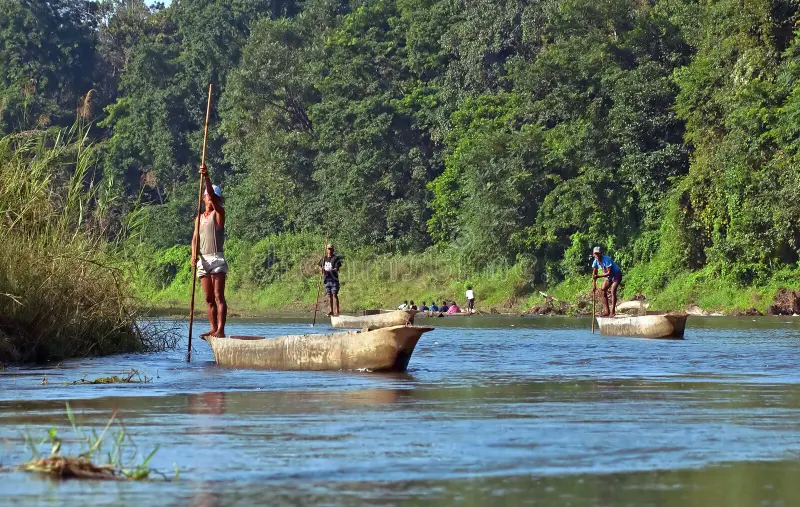
A team of cooks, guides, and helpers (and sometimes yaks carrying the heavy bags) travel with you. They set up camp, cook your meals, and make sure you’re safe. You just have to walk and enjoy the view.
The food is warm and filling – rice and lentils (dal bhat), pasta, soups, eggs, bread. After a long day of trekking, it tastes amazing.
One thing nobody warns you about: Yaks are slow and work on their own schedule. Sometimes your tent and dinner arrive a couple of hours later than expected. Just be patient it’s part of the adventure.
When Should You Go?
| Season | Months | What It’s Like | Should You Go? |
|---|---|---|---|
| Spring | May – Early June | Clear skies, not too hot or cold | Yes, great time |
| Monsoon | July – August | Upper Dolpo is drier than the rest of Nepal due to its location. Still wetter than spring. | Possible, but not ideal |
| Autumn | Mid-August – October | Stable weather, amazing visibility | Yes, excellent |
| Winter | November – April | Passes get blocked by snow. Very dangerous. | Don’t go |
Things Nobody Else Tells You – But You Really Need to Know
The flights at Juphal get cancelled all the time. Weather at that tiny airport is unpredictable. Plan for an extra day or two in Nepalgunj just in case. Seriously don’t skip this step.
Your phone won’t work for most of the trek. After Juphal, there’s no mobile signal for about 15 to 18 days. Tell your family before you go. Some trekkers carry a satellite device like a Garmin inReach so they can send short messages in an emergency.
Even experienced trekkers can get altitude sickness. Just because you’ve done Everest Base Camp before doesn’t mean you’re safe here. Sangda La is 5,490 metres. Always listen to your body and tell your guide if something feels wrong.
It gets very cold on the passes, even in May. Temperatures can drop to -10°C at night near the high passes. Bring a good sleeping bag and warm clothes. Don’t leave this to chance.
The monasteries have rules. When you visit Shey Gompa or any monastery, take off your shoes before entering. Walk around the buildings clockwise, not the other way. Don’t take photos of monks without asking first. These are real, sacred places.
Your permit has specific dates on it. If a cancelled flight pushes your schedule back, it can affect your permit. Make sure your trekking company knows this and plans for it.
Questions People Always Ask
yes. You should have already done a multi-day trek above 4,000 metres — like Everest Base Camp or the Annapurna Circuit. This is not a beginner trek.
No. The law says you must go with a licensed trekking company. Solo trekking is not allowed in Upper Dolpo.
Barely or not at all. After Juphal, expect no signal for most of the next 15–18 days.
Your guide watches everyone carefully every day. If you get very sick, you descend immediately. A rescue helicopter can be called in an emergency, but it depends on the weather. This is why travel insurance that covers high-altitude rescue is absolutely required.
Not many – sometimes fewer than 300 foreign trekkers per year do the full route. Compare that to the tens of thousands who go to Everest Base Camp. Upper Dolpo is genuinely one of the least-visited places on the trekking map.
Your Next Step Starts Here
Upper Dolpo is not the easiest trek. It is not the cheapest. And it is definitely not the most famous. But it might be the most rewarding.
For 24 days, you walk through one of the most remote, beautiful, and untouched places on Earth. You cross passes so high that the air feels thin. You sleep under stars with no city lights for hundreds of kilometres. You see a way of life that most of the modern world has completely forgotten.
People who go to Upper Dolpo don’t always find the right words to explain what it was like. That’s usually a very good sign.
Want to plan your Upper Dolpo Trek? Corsa Nepal Adventure takes care of everything permits, camping, guides, flights, and meals. Call us on +977 9851 021 716.